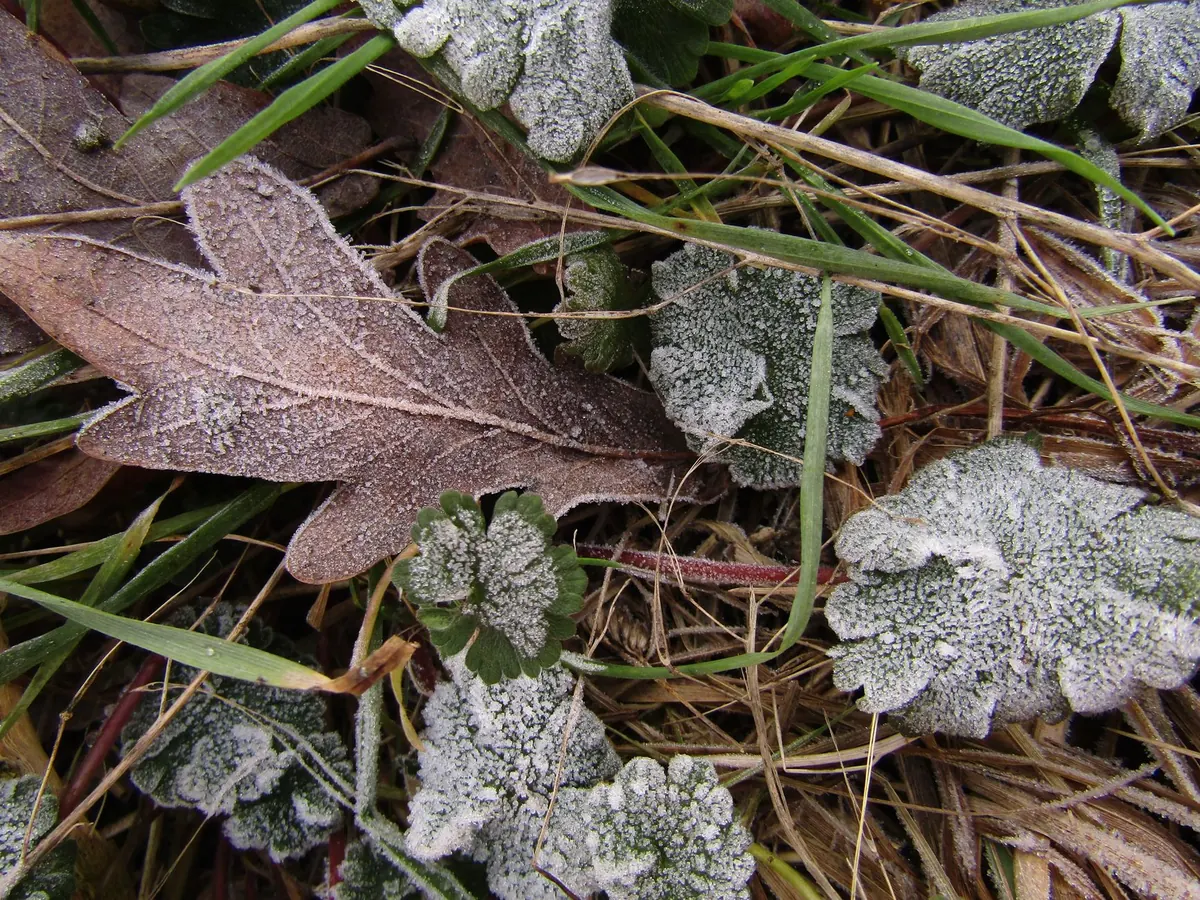
The first late frost that catches a plum tree in full flower teaches more than any chart. One morning the blossom is white and humming with bees; the next it hangs brown and soft, and the year's fruit is gone. Every grower who has lost a crop that way starts keeping notes. That is the real beginning of frost-date knowledge: not a number copied from a website, but a habit of watching your own ground.
Frost dates are simple in principle and slippery in practice. They mark the average boundaries of the growing season, and they are the backbone of every planting calendar in a rural garden. Used well, they tell you when to sow, when to harden off, when to move the tomatoes out, and when to start watching the sky in autumn.
What a Frost Date Actually Tells You
Two dates matter. The last spring frost is the average date of the final frost of the season; the first autumn frost is the average date of the first one. The stretch between them is your growing season, and it is usually shorter than people expect — especially in valleys, on cold clay, and anywhere the land falls away from the sun.
The important word is average. Weather services usually publish frost dates with a probability attached: one date for a 50 percent chance of a later spring frost, another for a 10 percent chance. If you plant to the 50 percent date, you can expect to be caught roughly every other year. For a first early sowing of peas that is a fair gamble. For a young apple tree carrying its first blossom, it is not.
Air frost and ground frost are different things
Official figures describe air temperature measured in a screen, about chest height. Your seedlings live much closer to the soil, and on a clear, still night the ground surface can be several degrees colder than the air above it. A forecast low of 3°C with a light breeze and clear sky is often a ground frost in a sheltered garden. This is why tender seedlings scorch on nights that look harmless on paper.
Finding Numbers for Your Own Place
Start with the nearest long-record weather station — national meteorological services publish these, and agricultural advisory services often summarise them by region. Airports, research farms and older village stations are useful too. Write the numbers down for both the 50 and 10 percent thresholds.
Then ask around. The oldest gardener on the lane, a neighbouring farmer, the beekeeper who has watched the blossom for thirty years: all of them carry local knowledge that no regional table contains. Ask when they consider it safe to put out beans, and when they expect the first frost on the low field.
Why the nearest station is not your garden
A station two villages away may sit on flat ground beside a road, while your plot drops into a hollow behind a hedge. Cold air is heavy; it slides downhill and pools. Your last spring frost might fall a fortnight later than the regional figure, and your first autumn frost a fortnight earlier. Treat published dates as a bracket to work inside, not a rule to obey.
Keep a Frost Log
This is the single most useful thing you can do in your first few seasons, and it costs very little. Buy a minimum-maximum thermometer, or two if you can manage it, and place one at about 1.2 metres in a shaded, open spot and the other just above bare soil or short grass. Then:
- Read and reset both thermometers every morning through the frost-risk months — roughly early spring and again from late summer onward.
- Note the date, the two minimum temperatures, and the state of the sky, wind and ground (clear, still, wet, frosted).
- Record what happened in the garden: frosted grass, blackened potato tops, curled bean leaves, undamaged leeks.
- Mark the first and last damaging nights of the year clearly, and compare them with the regional figures.
- Repeat every year. Two or three seasons of your own records will beat any table for accuracy on your land.
Keep the log in the potting shed, not on a phone. A pencil and a wall calendar get used on wet mornings when nothing else does.
Reading the Land Around You
Once you start looking, frost patterns on your ground become obvious. Sloping ground facing south or east warms early and drains cold air away; the bottom of the same slope collects it. Hedges, walls and fences block the flow of cold air and create a pool behind them, while a solid wall or building also stores warmth by day and releases it slowly at night. A bed against a south-facing stone wall can run a week or two ahead of an open patch thirty metres away.
Soil matters too. Heavy, wet clay holds the cold and dries slowly in spring; lighter, drier soil warms sooner. Bare soil warms faster than mulched ground, which is why it pays to leave spring mulching until the soil has come up to temperature. In an orchard, the warmest, highest, freely draining corner is where the earliest-flowering trees belong — apricots and early plums in particular, which so often blossom into a frost.
Planning the Season Around Frost
With your dates in hand, the year organises itself. Hardy vegetables — broad beans, peas, onions, brassicas, spinach, early lettuce — can go out several weeks before the last spring frost, and often taste better for it, though a hard late frost will still scorch the softest leaves. Half-hardy crops such as beans, sweetcorn, courgettes and tomatoes go out after the last frost date, ideally with a few days of margin. Tender crops like basil, squash and peppers want at least two weeks of comfort after that.
Work backwards from the first autumn frost as well. Check the days-to-maturity on your seed packets, add a fortnight for slower autumn growth, and you have a sowing deadline for anything that must ripen before the cold arrives. In the orchard, note when each tree flowers and how that lines up with frost risk. Bees will not work blossom in cold, wet or windy weather, so a tree flowering in a frosty spell can fail to set fruit even when the flowers survive.
When Frost Is Forecast
Protection works best when it is simple and ready beforehand. Fleece, cloches, old curtain netting and upturned buckets all buy a degree or two; laid out the evening before, they turn a damaging night into an inconvenience. Move pots and seed trays against the house wall or into the shed. Water the soil in the afternoon — moist soil holds more heat than dry soil and releases it overnight. Hold off hoeing, and pick anything that is ready rather than leaving it to be blackened.
In the morning, open covered plants up so they can dry and breathe, and leave frosted leaves alone until they have thawed; handling them while frozen does more harm than the cold did. And when young plants come out of the greenhouse, harden them off over a week or ten days rather than in one afternoon.
A Calendar You Can Trust
Start small: one thermometer, one notebook, the frost-risk weeks marked on the wall calendar. Note what the forecast said and what your garden actually did. Within three seasons you will have your own last and first frost dates, your own frost pockets, and your own list of what survives a cold night and what sulks. That is a better guide than any regional average, because it was written on your ground.